Module 6

Explore the issues – UN treaty bodies
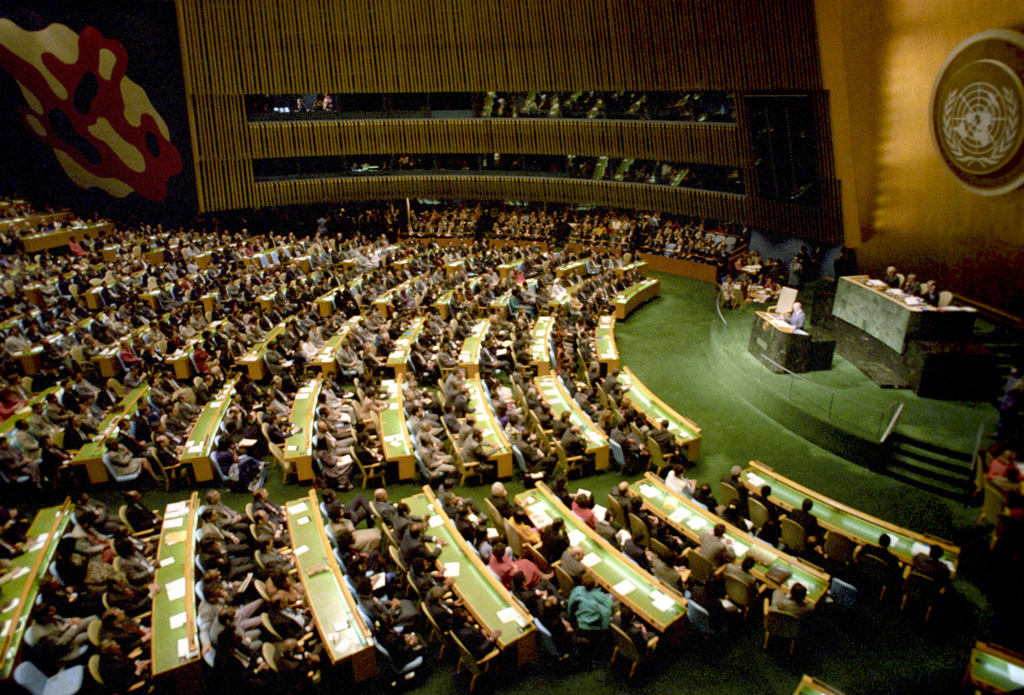
Mikhail Gorbachev, Soviet general secretary, addresses the UN General Assembly in December 1988
Meeting at the United Nations

What powers does the UN have to enforce international human rights law? How well-equipped is the UN to monitor states’ human rights performance and to hold governments that violate rights accountable? To get started in answering these questions read the statements below and indicate whether you think they are true or false.

1. Which of the following is the least widely ratified of the major UN human rights treaties?

Answer: The Rights of Migrant Workers Convention is the least widely ratified. Only 49 states have ratified the Convention – almost all of them countries of origin, not destination, for migrants. The Convention was adopted in 1990, much earlier than other treaties – for example, on the rights of persons with disabilities – which have a far greater number of ratifications

2. If a state party to a United Nations human rights treaty fails consistently to fully implement its provisions, which of the following sanctions might be applied?

Answer: None of the above. None of the UN human rights treaties provide for any penalties when states fail to fully abide by their provisions. They establish monitoring bodies which scrutinize the ratifying states’ human rights records, and which may draw attention to shortcomings, make recommendations and criticize the state, including in public reports. In serious situations, they might demand to visit the country. The only real international ‘penalty’ is the reputational cost to the state of being held non-compliant by an official UN body. However, the views of that UN body might be used by domestic courts – that can impose penalties on government.

3. In the past decade, which of the following domestic human rights issue in Canada received the most widespread criticism from the UN human rights treaty bodies?

Answer: The case of missing and murdered indigenous women (MMIW). All four of the situations above were raised by one or more of the UN human rights treaty bodies in their periodic review of Canadian compliance with treaty provisions. However, the very high number of unsolved cases of missing and murdered indigenous women, and the government’s failure to launch a national inquiry on the issue, were subject to repeated criticism by 5 separate treaty bodies (dealing with women’s and children’s rights, civil and political rights, and with torture and racial discrimination), from 2005-2015. The Canadian government announced the establishment of a national inquiry on this issue in 2016.

4. What is the annual cost of operating the supervisory systems established by the nine UN human rights treaties, and their several protocols?

Answer: USD$ 50,000,000. Is that a lot? It’s just twice the budget of the Canadian Human Rights Commission, which monitors legislation and hears complaints only concerning Canadian federal law (the UN treaties cover the whole world). The World Trade Organization overseas several treaties; its annual budget is USD $200,000,000. The Organization for the Prohibition of Chemical Weapons overseas just one treaty (albeit an important one); its annual budget is USD $85,000,000.